There are several places of interest in Virunga National Park.
The Nyiragongo Volcano and Its Lava Lake
Nyiragongo, one of the world’s most active stratovolcanoes, dominates Virunga’s volcanic landscape with its imposing summit and persistent activity. Rising to an elevation of 3,470 meters, this volcano is best known for housing the world’s largest permanent lava lake, a geological phenomenon that draws researchers and visitors alike. The lake’s molten surface, constantly shifting due to convection currents, emits a deep red glow visible from miles away, especially at night.
The volcano’s frequent eruptions have shaped Virunga’s terrain for centuries, with significant lava flows altering ecosystems and human settlements. The 2002 eruption, one of the most destructive in recent history, released a fast-moving lava stream that reached the city of Goma, covering streets and displacing thousands. Nyiragongo’s lava has an unusually low viscosity due to its high alkali content, allowing it to flow at remarkable speeds compared to other volcanic eruptions.
Beyond its geological activity, Nyiragongo supports unique high-altitude ecosystems. The lower slopes are covered with dense montane forests, gradually transitioning into afro-alpine vegetation as elevation increases. Some species, including endemic reptiles and specialized plant life, have adapted to the mineral-rich volcanic soil and fluctuating temperatures.
The Rwenzori Mountains and Their Glacial Peaks
The Rwenzori Mountains, often called the “Mountains of the Moon,” form Virunga’s western boundary, rising sharply from the Albertine Rift to elevations exceeding 5,100 meters. This range is one of the few places in Africa where permanent glaciers still exist, though they are receding due to climate change. The rugged peaks, often shrouded in mist, contrast the surrounding lowlands, contributing to the park’s dramatic topographical variation.
The Rwenzoris are classified as a block-fault mountain range formed by the uplift of ancient Precambrian rock along tectonic fractures. Unlike volcanic formations such as Nyiragongo, these mountains were created by rifting rather than magmatic activity. Their unique geological history has resulted in steep, jagged summits, deep valleys, and extensive bogs interspersed with alpine meadows.
Ecologically, the Rwenzoris support a sequence of distinct vegetation zones, each shaped by altitude and climate. The lower slopes are dominated by montane forests, home to species such as forest elephants, L’Hoest’s monkeys, and Rwenzori turacos. Higher elevations transition into bamboo thickets and heathlands, where giant lobelias and groundsel trees—some reaching six meters—thrive in the thin air. Above 4,000 meters, the environment becomes increasingly inhospitable, with sparse vegetation giving way to glaciers and snowfields.
Hydrologically, the Rwenzori range is crucial in regional water cycles, feeding rivers that sustain wildlife and human populations downstream. Meltwater from the glaciers contributes to the Semliki and Nile River systems, reinforcing the mountains’ significance beyond their visual impact.
The Ishasha Sector and Its Tree-Climbing Lions
The Ishasha sector, located in the southern reaches of Virunga, starkly contrasts the park’s volcanic and montane environments. Characterized by open grasslands interspersed with fig and acacia trees, this area supports a diverse population of large mammals, including African buffalo, topi, and forest elephants. However, the most distinctive feature of Ishasha is its population of tree-climbing lions, a rare behavioral adaptation that sets this region apart from other African lion habitats.
Unlike typical lion prides that spend most of their time on the ground, Ishasha’s lions regularly ascend the branches of fig trees, where they rest for hours. The reasons for this behavior remain the subject of scientific study. Still, prevailing theories suggest that it helps them avoid the heat, reduces insect harassment, and provides a strategic vantage point for spotting potential prey. Their agility in navigating thick branches is unusual for a species typically associated with ground-based hunting strategies.
These lions have adapted to an environment where large prey is relatively sparse compared to the Serengeti or Okavango. Their primary targets include Uganda kob, an antelope species that thrive in the area’s grassy floodplains. Unlike the high-speed chases seen in open savannas, hunting in Ishasha often involves ambush techniques, where lions use tree cover and tall grass for concealment before launching a coordinated attack.
For visitors, Ishasha offers an opportunity to observe unusual predator behavior rarely seen elsewhere. The sight of a fully grown lion sprawled across the limbs of a fig tree, blending into the foliage, reinforces wildlife’s adaptability to environmental pressures.
The Tongo Chimpanzee Habitat
The Tongo forest, a biologically significant enclave within Virunga National Park, is home to a population of eastern chimpanzees (Pan troglodytes schweinfurthii), a subspecies known for its complex social behavior and high cognitive abilities. This forested region, distinct from the park’s montane and savanna ecosystems, provides an ideal environment for chimpanzees, with a dense canopy, seasonal fruiting trees, and abundant nesting sites.
Chimpanzees in Tongo live in fluid social structures known as fission-fusion societies, where group size fluctuates based on resource availability and social dynamics. Unlike gorillas, which maintain stable family units, chimpanzees form dynamic alliances, often engaging in cooperative hunting and territory defense. Their diet consists of fruits, leaves, seeds, and, occasionally, small mammals, demonstrating opportunistic foraging behavior that highlights their adaptability.
Communication among these primates involves sophisticated vocalizations, facial expressions, and gestures. Researchers studying Tongo’s chimpanzees have documented distinct calls to alert group members to food sources or potential threats. Tool use, a well-documented behavior in chimpanzees, is also observed in Tongo, where individuals fashion sticks to extract termites or use leaves as drinking tools.
Beyond their behavioral complexity, chimpanzees play a crucial role in forest regeneration. By consuming fruits and dispersing seeds across vast areas, they contribute to maintaining the ecological balance of the forest. However, habitat degradation and human encroachment pose ongoing challenges to their survival, necessitating conservation interventions to secure their future in Virunga.
For visitors, Tongo offers a unique opportunity to observe chimpanzees in their natural habitat. Their intelligence, problem-solving abilities, and social interactions resemble human behavior in striking ways. Watching them navigate the canopy or engage in playful interactions reinforces their evolutionary significance and the importance of preserving their habitat within the park.
Mount Nyiragongo
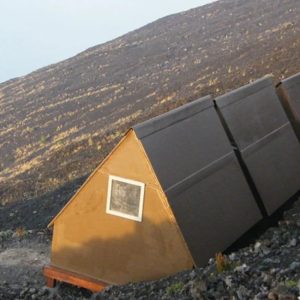
The Nyiragongo volcano brightens the skies of Goma city and the Virunga National Park. The last eruption occurred in 2011 leaving over 100,000 homeless and surrounding areas filled with ash. The solidified mountain of lava created the largest Crater Lake in the world that still sends smoke up the sky and attracts thousands of visitors every year. Trekking up the Nyiragongo Volcano is a two-day event that includes sleeping on top the volcano after being rewarded with a breathtaking close view of the boiling crater.
Lola Ya Bonobo Sanctuary
One of the attractive places to visit while in Kinshasa is the Lola ya Bonobo sanctuary. Bonobos are endangered pygmy chimpanzees that in the wild are only found in the DR Congo. The Bonobos are relatively peaceful compared to their larger cousins but have faced great persecution and are hunted for their meat. Covering a forest area of about 30 hectares, the sanctuary helps protect youngsters left orphaned after the killing of adults. Staff and volunteers at the sanctuary feed them and protect them from being sold as pets in illegal markets.
There are many other activities that visitors can get involved in while on a wildlife tour in Congo that may not have been described in detail above. Some of them include:
- Game drives to other national parks in Congo like Maiko which is near the capital Kinshasa.
- Visiting water bodies like the great river Congo – or Lake Kivu with its beautiful islands and boiling methane gas.
- Visiting the Livingstone and Boyoma Falls
- Hiking mountains like Nyamuragira (near Nyiragongo) which is Africa’s most active volcano.
- Visiting stone age caves like Dimba, Matupi, Thysville and Kakanda.
- Visiting the Okapi Wildlife Reserve.